Create VPN Connection
Configure AWS Site-to-Site VPN Connection
ℹ️ Overview
- In this section, we will set up a VPN connection between the VPC and the on-premises environment.
- Use a Virtual Private Gateway as the AWS-side VPN endpoint.
- Configure static routing to route traffic through the VPN tunnel.
Create VPN Connection
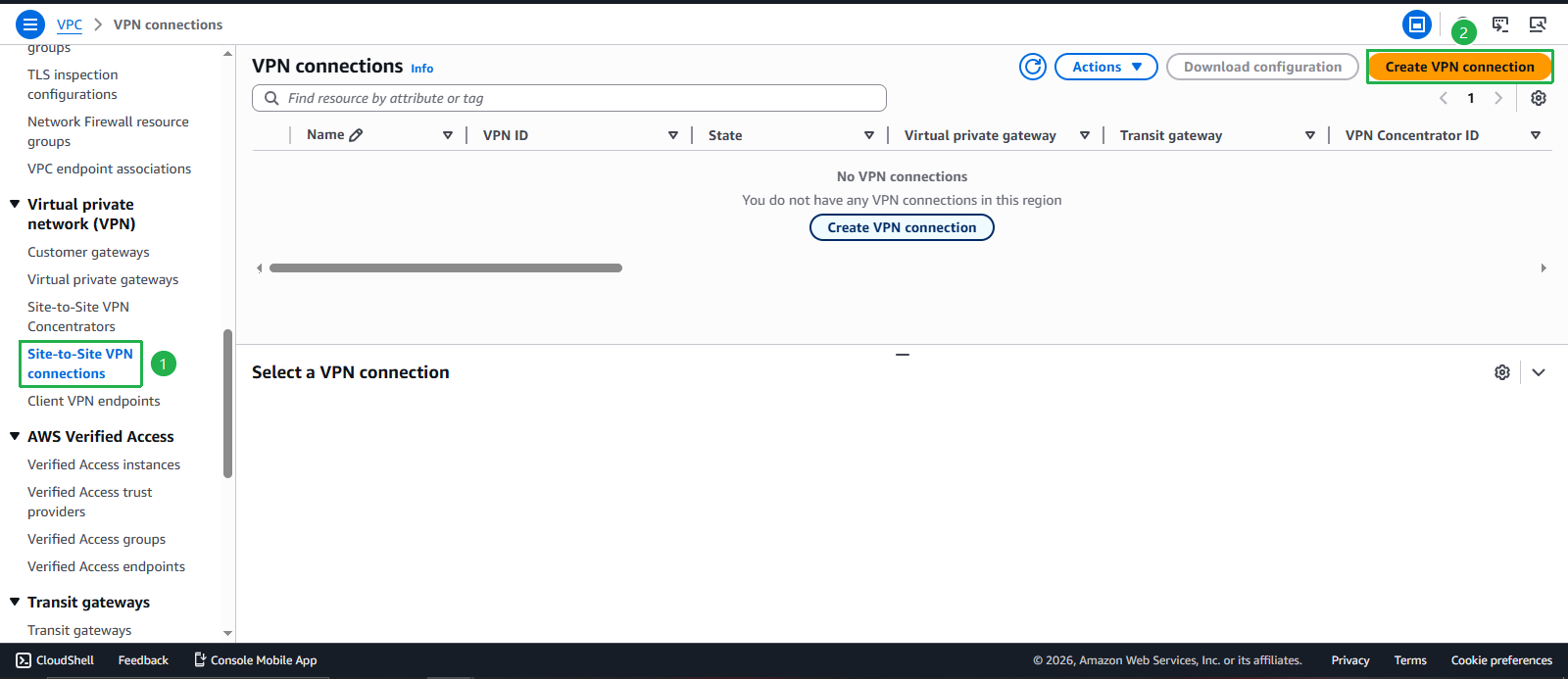
- Go to the AWS VPC Console
- Navigate to Site-to-Site VPN Connections
- Click Create VPN Connection

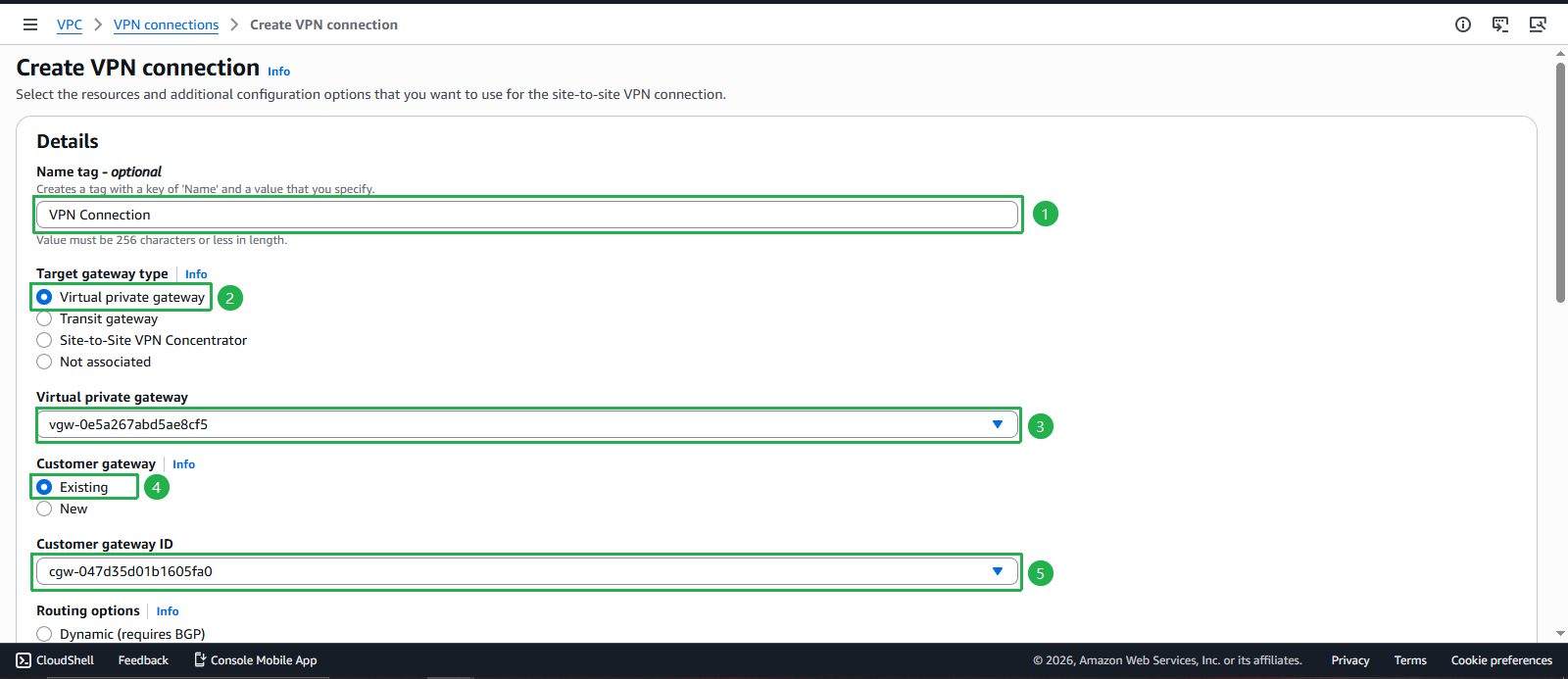
- Basic VPN Connection Configuration
- Name tag: Enter
VPN Connection - Target Gateway Type: Select Virtual Private Gateway
- Virtual Private Gateway: Select the previously created VPN Gateway
- Customer Gateway: Choose Existing
- Customer Gateway ID: Select the previously created Customer Gateway
- Name tag: Enter

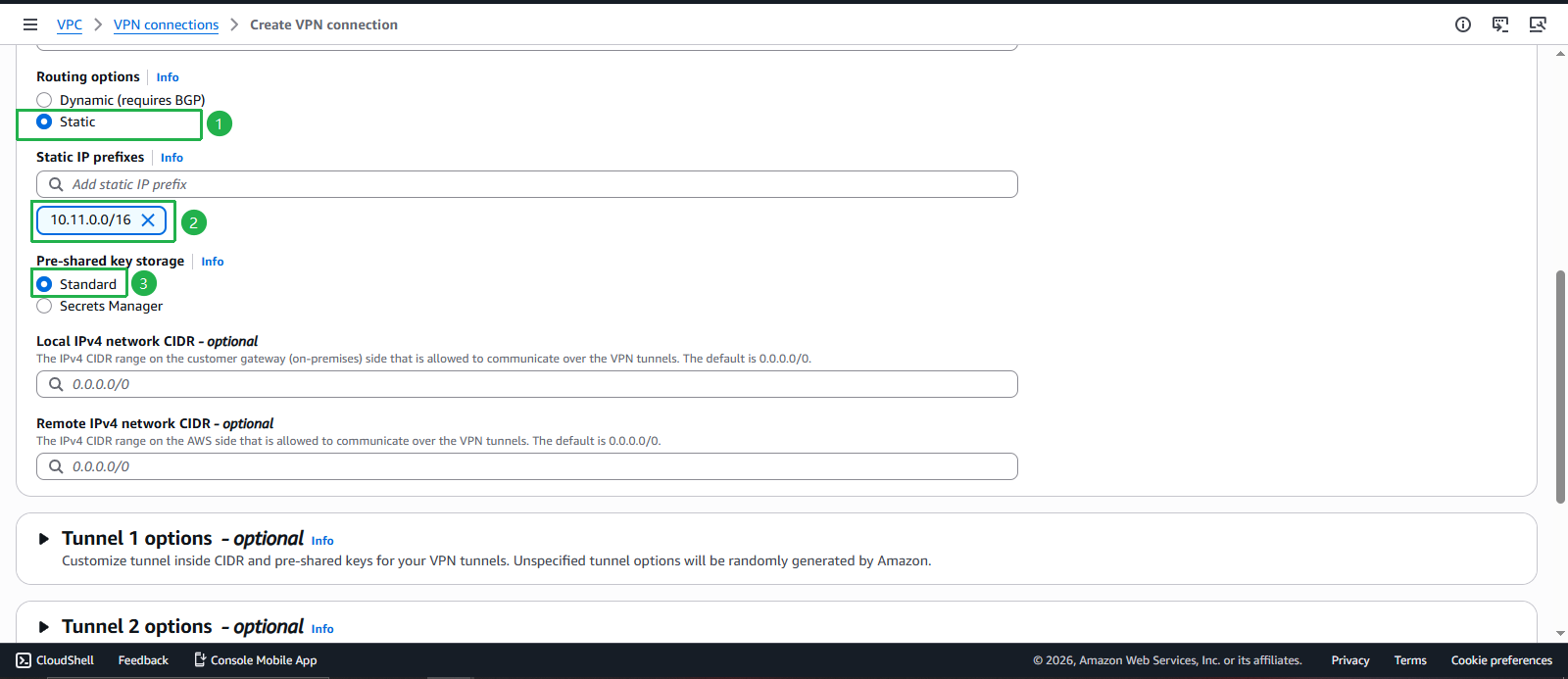
Routing Configuration
- Routing Options: Choose Static
- Static IP Prefixes: Enter
10.11.0.0/16(CIDR of the on-premises environment) - Keep the default tunnel configurations
💡 Static vs Dynamic Routing:
- Static: Simple, suitable for labs and small environments
- Dynamic (BGP): Automatic, suitable for production with many routes

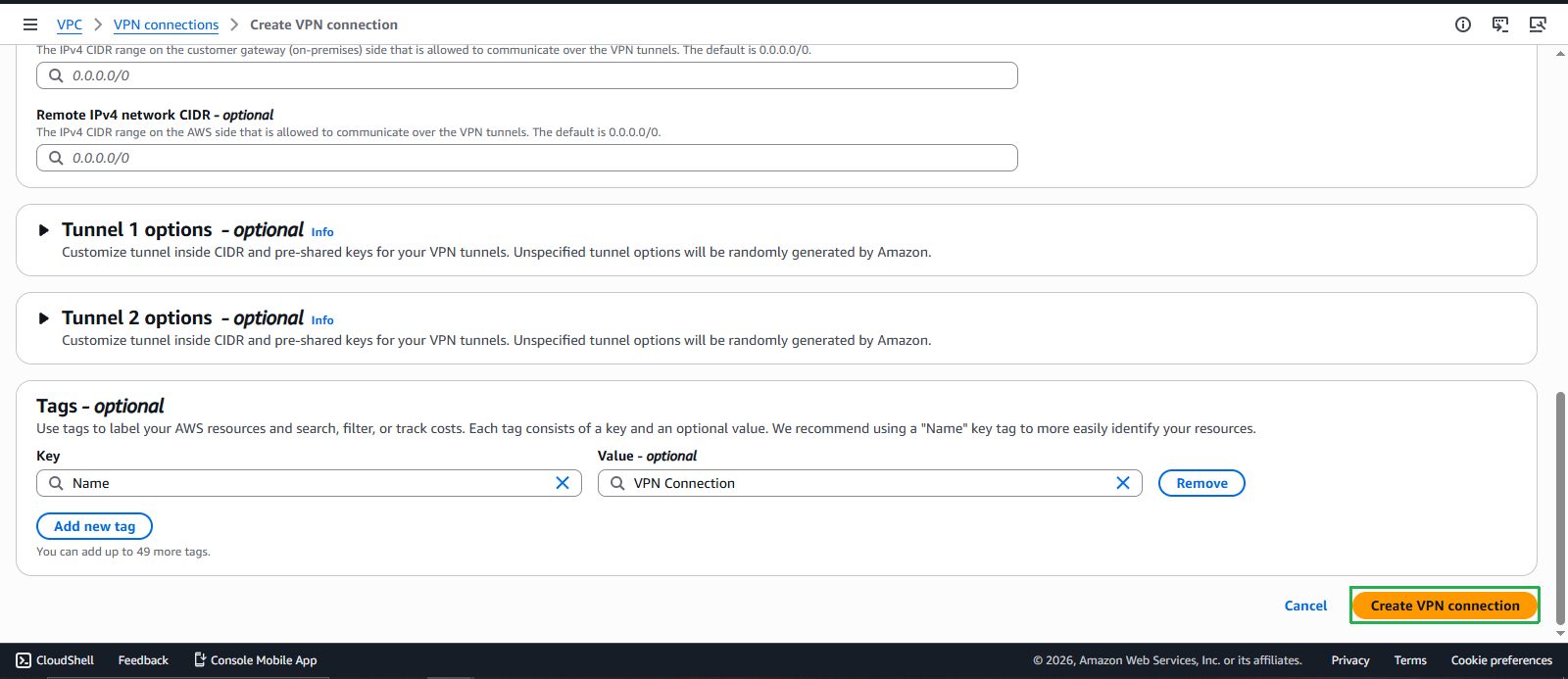
- Launch the VPN Connection
- Review the configuration
- Click Create VPN Connection

⚠️ Note
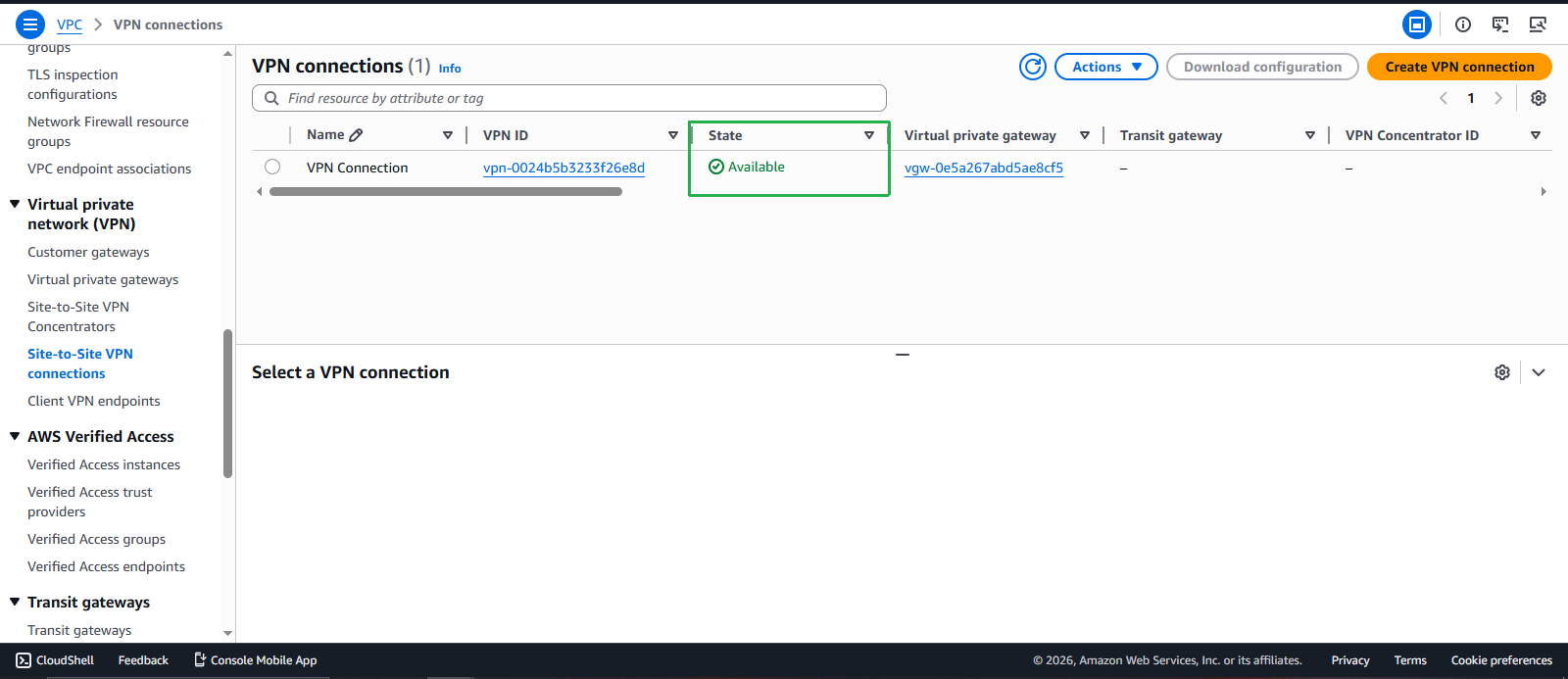
- VPN creation may take 5–10 minutes
- Wait until the status changes to Available before proceeding
Configure Route Propagation
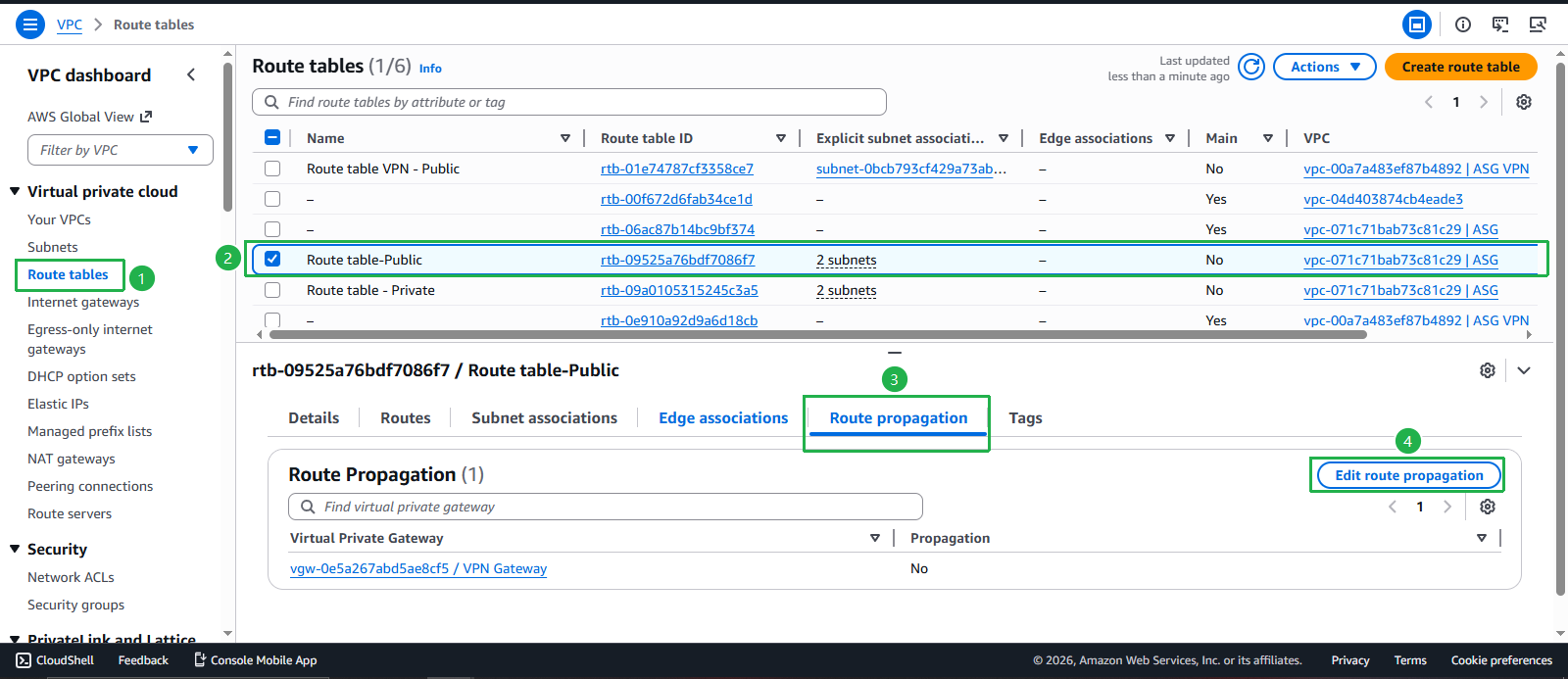
- Configure the Public Route Table
- Go to Route Tables in the VPC Console
- Select the route table for the Public subnet (ASG VPC)
- Open the Route Propagation tab
- Click Edit route propagation
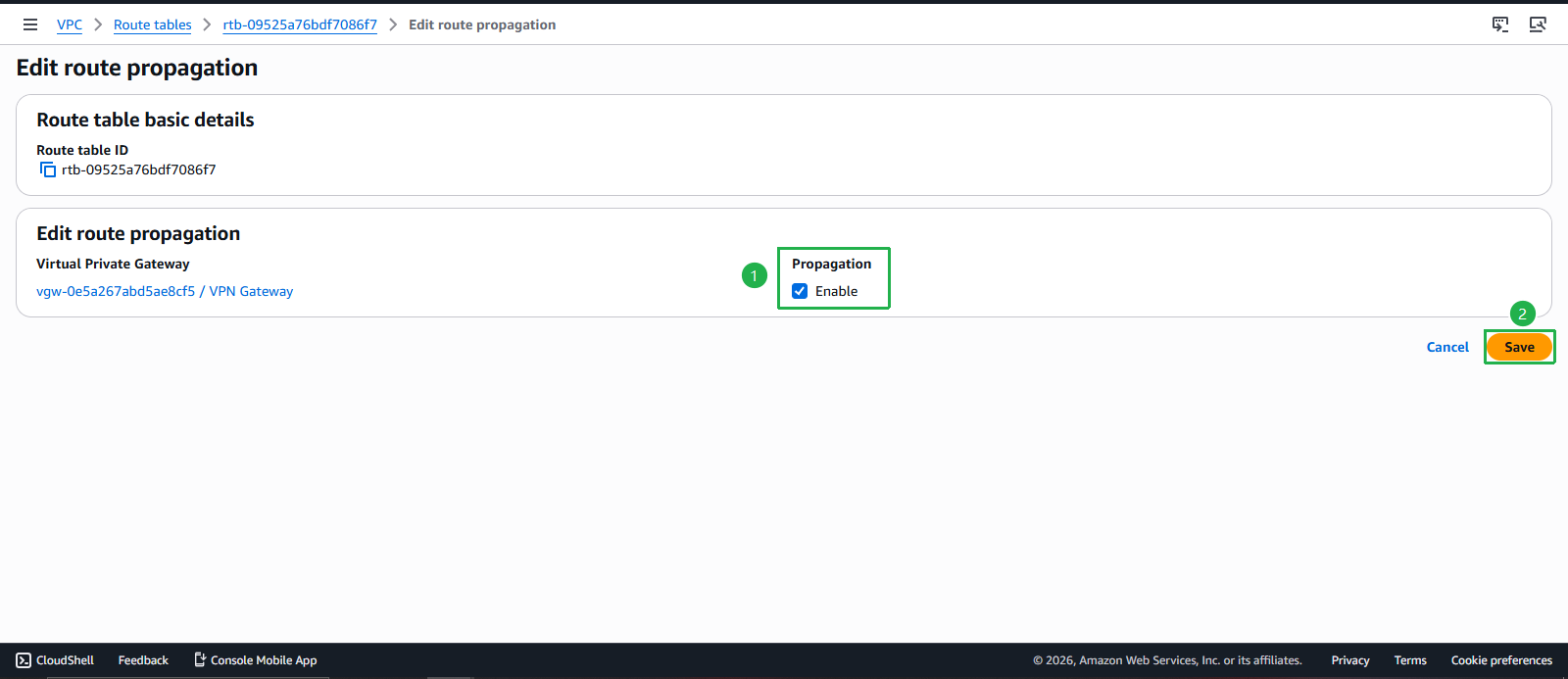
Enable Route Propagation
- Enable propagation for the Virtual Private Gateway
- Click Save
💡 Route Propagation: Automatically adds routes from VPN to route table without manual configuration
- Verify Status
- Ensure that Route Propagation shows Yes
- Route to 10.11.0.0/16 will appear automatically
- Repeat for the Private Route Table
- Select Private Route Table (ASG VPC)
- Perform the same steps
- Ensure route propagation is enabled
🏗️ VPN Connection Architecture
AWS VPC (10.10.0.0/16)
    ↓
Virtual Private Gateway
    ↓
VPN Connection (2 tunnels for redundancy)
    ├── Tunnel 1: Active
    └── Tunnel 2: Standby
    ↓
Customer Gateway (10.11.0.0/16)
💡 Key Concepts:
- VPN Connection: Creates 2 IPsec tunnels for high availability
- Static Routes: Manually configured routes (10.11.0.0/16)
- Route Propagation: Automatically updates route tables with VPN routes
- Tunnel Status: Will be “DOWN” until Customer Gateway is configured
🔒 Security Note
- Route propagation automatically updates routing tables when changes occur
- Enable propagation only for necessary route tables
- Verify propagated routes are correct
⚠️ Next Steps: VPN tunnels are currently DOWN. Need to configure Libreswan on Customer Gateway to bring tunnels UP!
✅ Completed: VPN Connection is created and route propagation is configured!